Hydro-jetting operates as an absolute scouring solution rather than a temporary puncture. A traditional mechanical drain snake or rooter blade cuts a 2-inch to 3-inch hole through an obstruction to relieve standing…
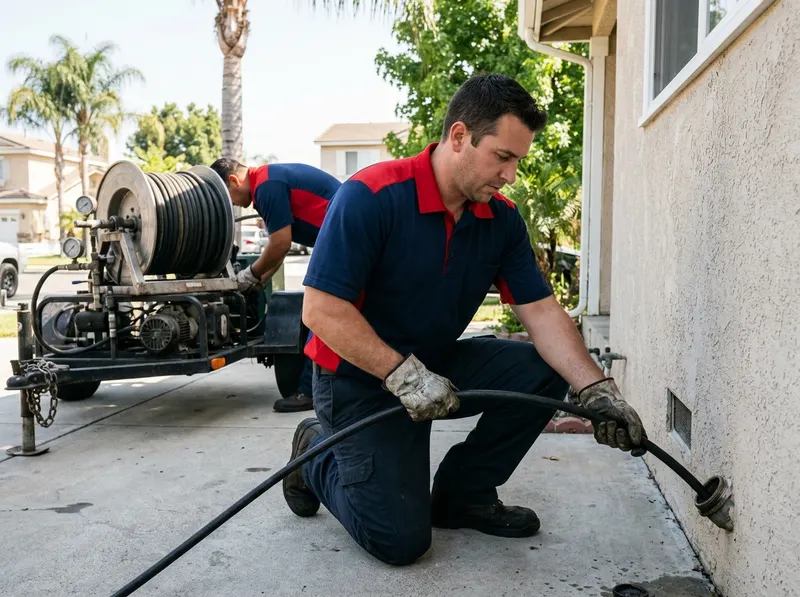
Hydro-jetting operates as an absolute scouring solution rather than a temporary puncture. A traditional mechanical drain snake or rooter blade cuts a 2-inch to 3-inch hole through an obstruction to relieve standing wastewater, but it leaves grease layers and root sleeves bonded to the 4-inch or 6-inch pipe walls. A hydro-jetter propels forward using reverse water jets under 3,500 to 4,000 PSI, peeling structural build-up flush to the interior boundary of the lateral pipe. The technical trade-off is mechanical pressure versus existing pipe integrity: clay and cast-iron lines past their structural lifespan can fracture under high water velocity, which makes an initial fiber-optic camera pass mandatory before pressurizing the line.
Sewer line complications in Los Angeles County vary significantly by district infrastructure and lot terrain. In hillside neighborhoods like Silver Lake, Los Feliz, and Echo Park, clay lateral pipes laid in the 1920s to 1950s contend with aggressive ficus and eucalyptus root systems seeking moisture near Elysian Park and Griffith Observatory. In flat basin regions like Koreatown and North Hollywood, multi-family properties encounter heavy cooking oil and kitchen waste accumulations that harden into solid fatbergs inside 4-inch lines. Along the coastal soil conditions of Venice and the foothill tracts of Westwood and Brentwood, sandy shifting substrates cause pipe bellies where grease and paper lodge continuously.
Scheduling service requires clear line access. A standard cleanout fitting, typically located within 3 feet of the exterior home foundation or near the property line curb, serves as the entry point. Properties in Highland Park or older foothill pockets lacking an exterior ground-level cleanout require technicians to pull an indoor toilet or access the main stack via the roof, which adds logistical time to line setup. The hydro-jetting unit uses roughly 15 to 18 gallons of water per minute, flushing the dislodged matter directly into the City of Los Angeles municipal sewer main under street level.
1. Intake dispatch confirms the lateral symptoms and cleanout location over phone intake at (747) 330-2135. 2. A technician conducts a digital camera evaluation to verify the pipe material and obstruction type. 3. The specialized jetting line advances through the cleanout, scouring 50 to 150 feet of line toward the city connection. 4. A follow-up camera sweep records the cleared pipe walls, verifying root extraction and full flow recovery.
Every job gets a firm, written price after a free on-site visit.
Tell us about your main sewer line hydro-jetting job in los angeles and we'll send a clear, written quote, usually the same day.
 LA Property Helpers